
Email: Inquiry@tobeepump.com
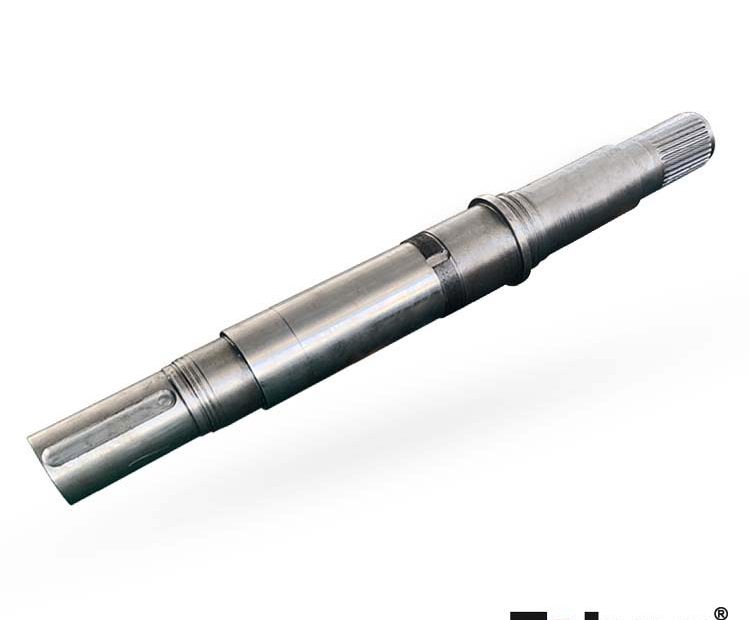
1.Shaft Bending: Shaft bending issues follow the same logic as shaft deflection above. Purchase pumps and spare shafts from manufacturers with high standards/specs for shaft straightness. Due diligence is prudent. Most tolerances on pump shafts are in the range of 0.0254mm to 0.0508mm, measured as Total Indicator Reading (TIR).
2. Unbalanced impeller or rotor: If the impeller is unbalanced, the pump will produce “shaft play” during operation. The effect is the same as the result of shaft bending and/or deflection, the pump shaft will remain straight even when the pump is stopped and inspected. It can be said that the balance of the impeller is equally important for low-speed pumps and high-speed pumps. The number of bending cycles in a given time frame is reduced, but the amplitude (strain) of the displacement (due to unbalance) remains within the same range as the higher velocity coefficients.
3. Fluid properties: Typically, problems with fluid properties involve pumps designed for one (lower) viscosity fluid but subjected to a higher viscosity. An example might be as simple as selecting and designing a pump for pumping No. 4 fuel oil at 95 F and then for pumping fuel oil at 35 F (a difference of about 235 centipoise). An increase in specific gravity will cause similar problems. Note also that corrosion will greatly reduce the fatigue strength of the shaft material. In these environments, a shaft with higher corrosion resistance is a good choice.
4.Incorrect speed: Depending on the inertia of the impeller and the (circumferential) speed limitation of the belt drive, there is a maximum pump speed (for example, it is generally agreed that the maximum belt speed for ANSI pumps is 6,500 feet per minute). Also, in addition to increased torque issues, attention should also be paid to low-speed operation, such as loss of the Loma King effect.
5. Variable speed: Torque is inversely proportional to speed. As the pump decelerates, the shaft torque increases. For example, a 100hp pump at 875 rpm requires twice as much torque as a 100 hp pump at 1,750 rpm. In addition to the maximum brake horsepower (BHP) limit for the entire shaft, the user must check the allowable BHP per 100 rpm limit for the pump application.